
Confirm that food storage is involved
Start by noting where the insects appear and what they are doing. An insect actually inside a food packet provides a different clue from a moth that flew in through the back door. Photograph the insect, the packet and any visible webbing or holes before discarding affected food. Keep a record of the shelf and the product name. You do not need to handle or taste suspect contents to decide that they should be set aside from food you intend to use.
The University of California's pantry pest guidance describes moths and beetles associated with stored foods, including signs such as webbing and damaged packaging. A moth in the laundry or wardrobe may have a different source. Ask for identification if the link to food is unclear rather than treating every small moth as the same pest. Our wardrobe and storage guide covers another problem that can be confused with pantry activity.
Write down when the kitchen was last free of sightings, when you noticed the first insect and whether anything recently entered storage. This could include a bulk purchase, a holiday food box, pet supplies or items brought from another house. The sequence helps narrow the search, but it is not proof of who introduced the pest. Focus on finding what is supporting activity now. A dispute about a particular grocery purchase will not locate an overlooked packet at the back of a cupboard.
Search by cupboard, not by favourite food
Empty one storage area onto a clear surface so you can inspect it without mixing suspect and checked items. Work from a written list of cupboards, drawers and overflow stores rather than repeatedly opening the flour tin. Include the less frequently used shelves where baking ingredients, spices or food gifts accumulate. Mark a location checked only when both the contents and the empty space have been inspected. In a kitchen shared by several people, ask everyone where they keep supplies before deciding that the search is complete.
Use separate containers or bags for affected food, uncertain items and items you have checked. Do not put a questionable packet into the clean group because the outside looks tidy. Record why it is uncertain, such as an insect seen nearby but none found inside. A pest professional can help decide what further identification or inspection is useful. If you keep the original packaging for a supplier enquiry, isolate it rather than returning it to the working pantry.
The University of Minnesota's stored-food insect guide notes that pet food, birdseed and some decorative plant materials can also be sources. That matters when a Cairns home stores food in a laundry, garage or outdoor utility cupboard as well as the kitchen. Give those locations their own place on the search list instead of assuming that kitchen cleaning covers the whole problem.
Separate disposal from cleaning
Once a food item is confirmed as affected, remove it from the household's usable food stock. Seal it for disposal so it is not accidentally returned to the cupboard by another person. Keep a short list or photograph of what you removed, particularly if several packets share a storage bin. This record helps you explain the original extent if insects reappear. It also makes it easier to replace essential ingredients without buying everything at once or forgetting what was discarded.
Avoid leaving the open disposal bag beside the pantry while you finish other jobs. Choose a clear route to the appropriate waste container and keep food waste inaccessible to pets. Check the outside of any reusable storage tub before carrying it into another room. The aim is to avoid moving an unresolved problem into a garage cupboard, a holiday packing crate or an outdoor cooking area. Moving a box is not the same as removing its contents from the property.
Take extra care where food is prepared for someone with dietary restrictions. A broad clear-out can leave them without suitable food even when the pest issue is manageable. Plan replacement staples and a separate clean storage place before starting. Keep the food-safety decision about a particular product separate from a pest-control purchase: an insecticide application does not make contaminated food suitable to eat, and a contractor should not offer that as the purpose of treatment.
Make the empty cupboard easy to inspect
With the contents out, inspect the areas that were hidden behind packets and shelf liners. Note spilled dry food, cracks, loose shelf fittings and inaccessible voids rather than immediately coating everything in cleaner. If a removable organiser is obscuring the corner, take a photograph of how it fits before removing it. You will want to put the cupboard back together in a way that leaves likely spill areas accessible. Avoid pulling apart fixed cabinetry that could conceal plumbing or electrical services.
Use a suitable vacuum attachment to remove loose food and debris from accessible crevices, then deal with the collected material promptly. Clean food-storage surfaces in accordance with the surface and cleaning-product instructions, and allow them to dry before restocking. Do not mix cleaning chemicals. If the cupboard has water damage, record that separately; a damaged cabinet may need a repair rather than repeated cleaning. Tell the repairer about the pest concern before work starts so materials are handled thoughtfully.
A useful cleaning record is brief: the cupboard, the date, what was removed and what could not be reached. It becomes valuable if sightings continue because the next inspection can test a specific unresolved location. Without a record, a household often repeats the most visible shelf while overlooking the same awkward corner. For someone with limited strength or reach, schedule help for the upper cupboards so the search does not quietly stop below the shelf most likely to be left untouched.
Know what a monitor can and cannot tell you
Ask what insect a proposed pantry trap is designed to attract before buying several packs. A monitor aimed at one moth does not establish that all stored-product insects have gone. Write the placement date and location beside it, following its instructions, and keep it away from situations where children or pets can disturb it. Take a photograph when checking it so changes can be compared without guessing whether today's insects were already there yesterday.
A catch tells you that the monitor encountered a target insect in that area. It does not automatically identify the original food packet or prove that the nearest cupboard is the only source. Likewise, an empty monitor does not certify the pantry. Use the information alongside the food inspection and the record of sightings. If a pest professional recommends monitoring, ask what result would lead them to inspect another room or change the approach.
Do not move every monitor each time you see a moth elsewhere. Keep a simple map and ask whether a second location should be added instead. Stable placement gives more useful comparisons than a trap that follows the latest sighting. For a large household, nominate someone to record checks while everyone else reports observations. That prevents several people from throwing away, replacing or moving the same monitor without telling one another, a common practical reason why follow-up information becomes impossible to interpret.
Restock in a way you can check again
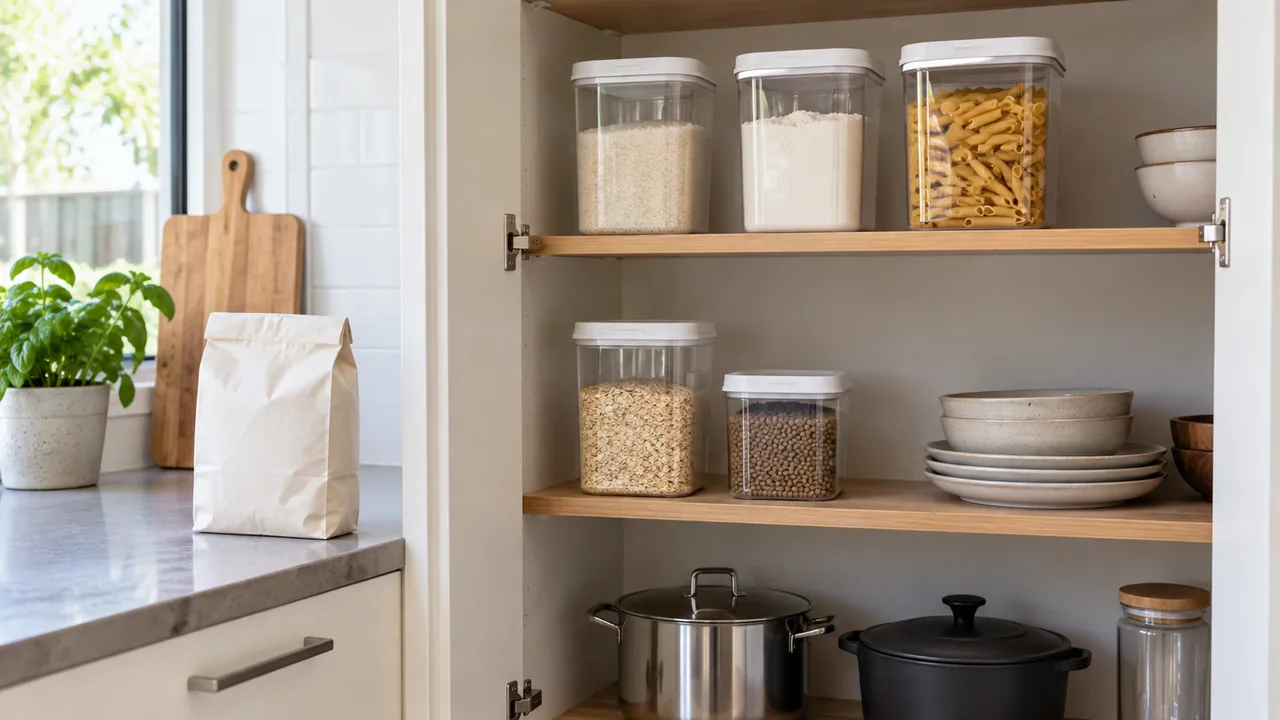
Choose storage containers that close properly and let you inspect what is inside. Match their size to the quantities the household actually uses so half-empty bulk bags do not remain hidden behind them. Keep the product name, purchase date and any information you need from the original packaging with the container. If an item later becomes suspect, you can identify it without tipping several similar powders onto the bench or relying on someone else's memory.
Do not repeatedly top up old stock with new purchases. Finish or remove the old contents, check and clean the container, then refill it. Put seldom-used ingredients where they remain visible and plan a separate place for occasional baking or festive food. In Cairns households that keep supplies for visitors or trips, a labelled reserve box makes those items easier to check than several unrelated bags in different cupboards. An organised store should help you notice a problem while the affected stock is still small.
Inspect new purchases as you put them away, paying attention to damaged packaging. Keep pet-food storage included in the same routine, even if it sits outside the kitchen. Avoid buying more than the household can sensibly store and inspect. This is a practical stock-management choice, not a guarantee against pests. If you leave the house for a long trip, include stored food in the departure checklist instead of returning to old supplies that nobody remembers buying.
If activity continues, change the investigation
Continued sightings deserve a review of the evidence rather than an immediate repeat of every cleaning step. Compare where insects are now appearing with the original locations. Check whether the same insect has been identified, whether all food stores were inspected and whether a previously uncertain packet remains. Tell the inspector about decorative materials, stored animal feed and inaccessible spaces that were outside your first search. A specific unresolved location is a better next task than another unspecific whole-kitchen clean.
When requesting professional help, describe the work already completed and ask for a source-focused inspection. Clarify whether the quote includes identification, searching secondary storage areas, advice on affected goods and a follow-up review. A standard general pest treatment may have a different target and scope. Do not assume the broad service name means the contractor will inspect every packet or clean the pantry for you.
If a pesticide is proposed, ask where it would be applied and how food, utensils and food-contact surfaces would be protected. Get preparation and return instructions for that particular treatment. The UC guidance places finding and removing affected food at the centre of control; spraying should not replace that search. Once the source is addressed, keep a modest observation routine and the written record so any recurrence starts with evidence rather than another expensive cupboard reset.