
Start with the insect, not the bite pattern
If you have just returned to Cairns and noticed marks on your skin, separate the health question from the pest question. Skin marks alone do not establish that bed bugs are in your house. Photograph any insect you can see without dismantling furniture, and record the room and exact surface where you found it. A clear photograph of a specimen is more useful to an inspector than a photograph of an irritated arm. Seek health advice for symptoms rather than asking a pest technician to diagnose them.
Look for a pattern in the physical evidence. A bug on a suitcase seam, repeated insects near a bed frame, or suspicious spotting on bedding gives the inspection a starting point. Keep the original photos and make a short dated note, including whether the bed was used before or after the trip. Avoid deciding which hotel, visitor or flight caused the problem. That conclusion often cannot be established, and it does not change the immediate need to inspect the home.
The US EPA's bed bug control guidance starts with correct identification, recording affected locations and limiting spread. Those principles are useful here; Australian treatment products and directions still need to be selected locally. Ask the inspector whether the available evidence supports identification, further monitoring or a targeted inspection. An uncertain photograph should lead to a clearer investigation, not a confident diagnosis invented over the phone.
Give luggage a controlled holding place
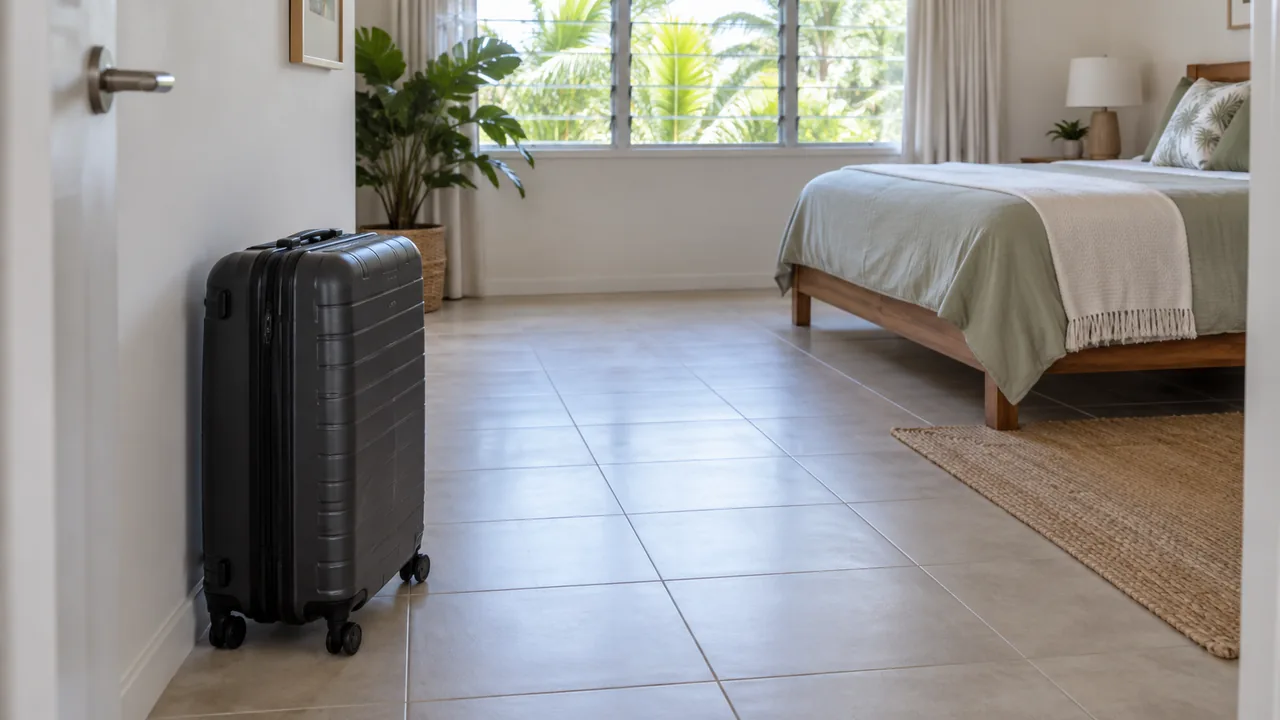
The first practical decision is where the travel bags will stay while you obtain advice. Choose a place that lets you keep suspect luggage separate from clean laundry and everyday storage. Do not take everything upstairs, spread clothes across several beds, then try to remember which items came from which bag. Keep each bag's contents together until you have a handling plan. If belongings are already unpacked, write down where they went; you do not need to recreate the unpacking or carry them back through the house.
Use clearly labelled bags or containers to distinguish suspect belongings from items that have completed an agreed treatment or cleaning process. Labels should describe status, not just ownership: awaiting assessment, awaiting laundering, or cleared under the treatment plan. Keep the labels with the items when another family member takes over. A spare bedroom is not automatically a safe store if it is also used for clean bedding, guests or children's toys. Tell the inspector where you have put the luggage and whether anything has moved since.
Do not assume that an afternoon in a hot Cairns car, a sunny patio or a closed suitcase has treated the contents. Temperature inside folded clothes and insulated pockets may differ from the surrounding air. The EPA's safety guidance explains why improvised heat and freezing methods can be unreliable or hazardous. Ask for a method suited to the actual material, including shoes, electronics and items that cannot be washed.
Make the bedroom inspection specific
An inspection request should name every sleeping space used since the trip, including a sofa bed or a child's room where someone moved for comfort. Include the bed construction: upholstered headboard, timber frame, storage base or mattress on the floor. Access can be very different between these arrangements. A lift-up storage bed full of belongings requires another preparation plan from a simple frame with open space beneath it. Ask what should remain undisturbed until the inspector arrives.
Explain whether the room is in a detached home, a unit or shared accommodation. In a Cairns apartment, a problem reported in another room or neighbouring unit may change the investigation boundary. The technician should decide what adjacent areas need checking from the evidence and building layout. Do not enter a neighbour's property or move furniture into a shared corridor to make space. A resident or manager can coordinate access without sharing private guest or travel details more widely than necessary.
Prepare a simple room sketch showing beds, luggage storage and the locations of photographs. Add places you could not check safely, such as a heavy wall-mounted headboard or electrical fitting. Leave dismantling instructions to the professional. The EPA's preparation advice stresses reducing clutter and avoiding movement of items between rooms. Your aim is to make the problem easier to investigate while keeping a record of what has changed.
Organise laundry without spreading the problem
A useful laundry plan answers several separate questions: which belongings need processing, how they will reach the machine, which cycles suit them and where they will go afterwards. Ask the technician for written instructions tied to the chosen control method. Keep those instructions beside the laundry rather than relying on one person to remember a telephone conversation. Washing, drying and handling are separate steps; the word washed on a bag can otherwise create false confidence about what has actually happened.
Before committing to a treatment process, check the care labels on bedding, curtains, work uniforms and delicate garments. Make a separate list of items that cannot tolerate the recommended process. These may need a different method, specialist cleaning or further advice, not a hotter cycle chosen by guesswork. For a busy household with limited drying space, ask the contractor to prioritise the essential bedding and clothes so that preparation remains achievable. Explain any mobility or lifting limitations when booking.
If you use a shared laundry, tell the pest professional before transporting suspect items there. Ask how to contain the load, transfer it and handle the empty bags. Clean items should return to a clearly separate place instead of the same unprocessed suitcase. A household member can manage the label system while another handles laundry, reducing the chance that a mixed basket undoes the preparation. Keep spare packaging available so there is no need to reuse an uncertain bag simply because it is convenient.
Compare treatment plans by coverage and follow-up
A quote should say what evidence was found, which rooms and furnishings are included, what methods are proposed and what preparation you must complete. Ask whether inspection and treatment are separate appointments and whether their charges are separate. A whole-house treatment and a focused bedroom treatment are different scopes; neither should be selected solely because its description sounds more thorough. The person proposing it should explain why the evidence supports that boundary.
Ask how the contractor will deal with inaccessible harbourages, sensitive belongings and rooms that must remain in use. Clarify who moves heavy furniture, who disconnects anything that needs specialist attention and what happens if access is unavailable on the day. A job can be delayed when the preparation sheet assumes that a resident can lift a mattress or move a wardrobe unaided. Put these practical limits in writing before accepting the appointment, especially for an upstairs unit without easy lift access.
Follow-up deserves its own line in the quote. The EPA's integrated management guidance describes combining methods rather than relying on a single application. Ask what monitoring will be used, what would trigger another visit and which return visits are included. A promise that the room will be clear after a fixed number of days is less useful than a plan that explains how the result will be checked.
Decide about furniture after assessment
Finding a suspect insect does not automatically mean the mattress, sofa and luggage all need replacement. Ask which items can be inspected and treated before arranging a collection. Replacing an item while other affected belongings remain in the room may leave the underlying problem unresolved. It can also consume money that would otherwise pay for a more complete inspection or the follow-up that the room needs. Keep purchase decisions separate from the understandable urge to clear everything out.
If disposal is recommended, plan the route out of the property with the contractor and the collection provider. Do not carry an exposed mattress through shared stairs and leave it where another person might take it home. Ask how the item should be wrapped, identified and held until collection. In a unit complex or holiday property, coordinate with the building manager so that waste storage and access arrangements are clear. Do not assume that a regular cleaner can also provide suitable pest-containment handling.
Keep replacement furniture outside the affected room until the treatment plan says it can be brought in. The same applies to borrowed bedding and spare cushions moved from an unaffected room. A short inventory helps you explain what stayed, what was removed and what returned. This is particularly useful when relatives are helping while you are away from Cairns: they can follow the inventory instead of making well-meant changes that the technician later has to reconstruct.
Agree on what counts as progress
After treatment, use the contractor's monitoring instructions rather than repeatedly pulling the room apart. Record sightings by location and date, including whether the insect was alive and whether identification is confirmed. Send clear photographs through the contact method the contractor provides. Ask whether monitors should remain in their positions and who is responsible for checking them. Moving them to whichever corner seems worrying makes comparisons between visits harder.
Set the follow-up appointment or reporting point before the first visit ends. Ask what findings require earlier contact and whether the contractor needs to know about overnight visitors, new furniture or another trip during the monitoring period. For a household that travels regularly, keeping a small arrival routine for luggage is easier than improvising after every journey. Read the pest treatment preparation guide alongside the job-specific instructions, but use the latter wherever they differ.
Keep the report, photographs and preparation instructions in one folder. If a later sighting occurs, this makes it possible to compare the original problem with the new evidence instead of simply repeating the same treatment. The immediate objective is a confirmed identification and a workable room plan. Successful follow-up then depends on the agreed evidence checks, not on an absence of worry or a newly purchased mattress.